
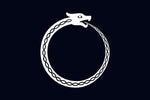
The Snake That Eats Itself: Finding Meaning in the Ouroboros
5 min reading time
5 min reading time
I've always been drawn to symbols that don't make sense at first glance. The ouroboros is one of those. A snake eating its own tail. When you first see it, you might think it's strange. Maybe even disturbing. But then something clicks.
This symbol has appeared in art for thousands of years. It shows up in places you wouldn't expect. Ancient Egypt. Medieval books. Modern tattoos. Each time, it means something a little different. Yet the core idea stays the same.
The name comes from Greek words. "Oura" means tail. "Boros" means eating. Simple as that. But the meaning? That's where things get complex.
The oldest known ouroboros comes from Egypt. Picture this: around 1600 BCE, someone painted a serpent on a tomb wall. The snake formed a perfect circle, mouth clamped on tail. It guarded the sun god Ra as he traveled through the underworld each night.
The Egyptians saw time as circular. Day became night. Night became day. Death led to rebirth. The ouroboros captured this idea in one image. No words needed.
Greek mystics picked up the symbol later. They used it in their secret texts. For them, it meant "all is one." The snake had no beginning, no end. It was whole and complete. Self-sustaining.
I wonder what those early artists felt when they drew it. Did they sense they were creating something that would last? Or was it just another day's work?
Jump forward to medieval Europe. Monks and scholars were obsessed with turning lead into gold. They called this alchemy. Their books were filled with strange drawings. And there, again and again, was the ouroboros.
But these weren't just pretty pictures. Each element meant something. The snake might be half black, half white. Light and dark. Male and female. Spirit and matter. The alchemists believed opposites needed each other. You couldn't have one without the other.
One famous image shows an ouroboros with the words "The All is One" written inside. Another shows two serpents, one eating the other's tail. They form a figure eight. The symbol for infinity.
These medieval artists worked by candlelight. They mixed their own paints. Every line took effort. They believed their work held real power. Maybe it did.
Here's what gets me about the ouroboros in art. It's not just a symbol someone slaps onto a page. Artists keep finding new ways to show it.
In Renaissance paintings, you might see it tiny. Hidden in a corner. A secret message for those who knew what to look for. Other times, it takes center stage. Bold. Demanding attention.
The Aztecs had their own version. A fire serpent called Xiuhcoatl. It formed a circle and represented the sun's yearly path. Different culture, same basic idea. That makes you think.
Japanese artists drew dragons in circles, tails in mouths. Chinese art shows similar images. These cultures didn't talk to medieval Europeans. Yet they all landed on the same form. The circle. The cycle. The return.
Walk into a modern art museum. You might see the ouroboros done in steel. Or neon lights. Or made from recycled plastic. Artists today still can't leave it alone.
Why? Because the questions it asks are still our questions. What does it mean to destroy yourself to create yourself? How do we break bad cycles? How do we honor good ones?
I saw a street artist paint one on a wall once. She used spray paint. Bright green and electric blue. The snake looked alive. Like it might actually move. People stopped to stare. Some took photos. Others just stood there, quiet.
That's the thing about powerful symbols. They work on you without asking permission.
Artists don't just draw the shape. They make choices about color. And those choices change everything.
A black ouroboros feels heavy. Final. It might represent death or the void. A gold one feels precious. Sacred. It might mean the sun or eternal life.
Green suggests nature. Growth. The cycle of seasons. Red could mean blood. Life force. Passion or anger. Blue might show water. The tides. Emotions that ebb and flow.
Some artists use a gradient. The snake fades from dark to light as it goes around. This shows transformation. The idea that things change as they cycle.
Stand back and look at the big picture. This symbol has survived. It moved from culture to culture. Century to century. Style to style. That's rare.
Why does it stick? I think it's because life really does move in circles. We learn lessons, forget them, learn them again. Seasons change and return. We hurt people, get hurt, find healing, and start over.
The ouroboros doesn't pretend this is bad or good. It just shows the truth. The cycle exists. You're part of it.
When I look at ouroboros art now, I see all those layers. The ancient tomb painters. The medieval mystics. The modern spray paint artists. All of them asking the same questions through one simple image.
A snake. A circle. A beginning that's also an ending.
It shouldn't work. But it does. And that's why artists will keep drawing it. Why we'll keep looking at it. Why this strange symbol of self-consumption somehow feels like hope.
The ouroboros reminds us that nothing truly ends. It all comes back around. Different, maybe. Changed. But connected to what came before.
That's not a small thing to hold in one image.


$30.00


$44.99 - $49.99


$24.99 - $29.99


$44.99 - $47.46