
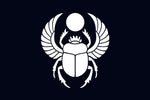
The Scarab Beetle in Ancient Egyptian Art
5 min reading time
5 min reading time
I still remember the first time I saw a scarab beetle carving in a museum. It was tiny. Blue-green stone, smooth as glass. I thought it was just a bug. But then I learned what it meant to the ancient Egyptians, and everything changed.
The scarab beetle wasn't just any insect to them. It was sacred. Holy. A symbol of the sun god himself.
Here's the thing that gets me. The Egyptians watched these beetles roll balls of dung across the sand. Sounds gross, right? But they saw something else. They saw the sun moving across the sky.
The beetle pushed its ball from east to west. The sun did the same thing every day. In their minds, these two things connected. The beetle became linked to Khepri, the god who pushed the sun across the heavens each morning.
That's the kind of thinking that makes ancient Egypt so wild to me. They looked at nature and found meaning in everything.
The scarab meant even more than the sun's daily trip. It stood for rebirth. For starting over.
Baby beetles came out of those dung balls. Life from death. New from old. The Egyptians believed the soul could do the same thing. Die, then live again.
This idea was huge for them. They spent their whole lives getting ready for death. Building tombs. Making art. Writing spells. All so they could come back to life in the next world.
The scarab was their promise. Their hope carved in stone.
Once you know what to look for, you see scarabs in Egyptian art all the time. They made them from everything. Stone, clay, wood, gold. Even glass.
Some were big. Some fit on your fingertip. The most common ones were amulets. People wore them for protection. They believed the beetle's power would keep them safe.
I've seen photos of mummies with scarab amulets placed over their hearts. The Egyptians put them there on purpose. They thought the heart would be judged in the afterlife. The scarab would help it pass the test.
Other scarabs had flat bottoms. Artists carved names, pictures, or wishes into the flat part. These worked like stamps. Press them in wet clay and you'd leave your mark.
Kings used special scarabs to announce big news. A royal wedding. A successful hunt. These were like ancient press releases, but way cooler.
The heart scarab might be the most important type. These were bigger than the others. Made from dark green or black stone usually.
Artists carved a spell on the bottom. The spell came from the Book of the Dead. It told the heart not to speak against its owner during the final judgment.
Think about that for a second. They were so worried about their own hearts betraying them that they needed a magic beetle to keep it quiet.
That's both funny and sad to me. It shows how human they were. How scared. How much they wanted to get the afterlife right.
The colors meant things too. Blue-green was super popular. That color represented water and plants and life itself. Many scarabs came from a material called faience. It's like glazed clay that shines bright blue.
Gold scarabs showed up in royal tombs. Gold was the flesh of the gods. Only the rich could afford it.
Green stones like jade or malachite got used a lot. Green meant growth and fresh starts.
Black basalt appeared in heart scarabs. Black was the color of rich Nile soil. It meant fertility and life coming from the earth.
Every choice the artists made carried meaning. Nothing was random.
Creating these small works took real skill. Artists shaped the stone by hand. They carved tiny legs and wing details. Some scarabs are so small I don't know how they did it without going blind.
The flat bottom needed careful work too. Carving backwards so the stamp would read correctly. Getting the letters right. Making pictures that told whole stories in a space smaller than a coin.
Some workshops made thousands of these. They became a trade item. Other cultures started wanting them. Scarabs traveled far from Egypt through trade routes.
Egyptian art lasted for thousands of years. Scarab styles changed during that time, but not as much as you'd think.
Early ones were simple. Basic beetle shape. Not much detail.
Later, during the New Kingdom, artists got fancy. They added more realistic features. Better proportions. Finer carving.
Some periods preferred certain stones over others. Fashions changed, even back then.
But the basic idea stayed the same. Beetle equals sun equals rebirth. That never changed.
Museums around the world have scarab collections now. Thousands of them. Maybe tens of thousands.
People still buy scarab jewelry. Not because they believe in Khepri. Just because they think it looks cool or interesting.
But I wonder sometimes if the original meaning still whispers to us. The idea of starting over. Getting another chance. Rising up new each morning like the sun.
We all want that, don't we?
What I love most is how the Egyptians took something ordinary and made it sacred. A dung beetle. Not a lion or eagle or snake. A bug that rolls poop.
They saw past the surface. They found the pattern. The meaning. The magic in everyday life.
That's what great art does. It makes you look closer. Think deeper. See connections you missed before.
Those little blue beetles taught me that. Every time I see one now, I think about the hands that shaped it. The person who wore it. The hope they carried.
And I remember that art can turn anything into something beautiful. Even a beetle pushing a ball of dung across the sand.


$30.00


$44.99 - $49.99


$24.99 - $29.99


$44.99 - $47.46